At a Glance:
Sagging skin on the face and neck is a natural part of aging, caused by collagen loss, gravity, and lifestyle factors. Non-surgical treatments like microneedling, radiofrequency, and dermal fillers can improve firmness and texture. Skincare helps maintain skin health but doesn’t directly tighten sagging. Professional treatments are most effective for noticeable sagging, with early intervention offering the best results.
Sagging skin on the face and neck is a common concern that develops gradually over time. Changes in skin firmness, jawline definition, and neck tightness are often part of the natural aging process, influenced by anatomy, lifestyle, and genetics. While these changes are expected, many people feel uncertain about what actually helps and which options are realistic.
The face and neck are especially noticeable areas. Skin laxity in these regions can make the face appear tired or less defined, even when overall skin health is good. With so many products and treatments available, it is understandable that people feel unsure about what works and what does not.
Why does skin on the face and neck start to sag?
Skin sagging develops as a result of structural changes beneath the surface. Over time, the body produces less collagen and elastin, the proteins responsible for skin strength and flexibility. As these support fibres decline, skin becomes thinner, weaker, and less able to resist gravity.
Other factors contribute as well:
- Facial support loss: Fat pads and connective tissue shift or reduce with age, affecting contour and firmness.
- Gravity: Continuous downward pull contributes to looseness, particularly in the lower face and neck.
- Sun exposure: UV damage weakens collagen over time, speeding up visible sagging.
- Lifestyle influences: Smoking, dehydration, poor sleep, and nutritional gaps affect skin quality.
- Anatomy: Some people are naturally more prone to loose skin due to genetics or skin thickness.
The neck often shows sagging earlier because it has thinner skin, fewer oil glands, and less natural support than the face. It is also frequently exposed to sun while receiving less daily skincare.
It is also important to distinguish loose skin from volume loss. Loose skin refers to reduced firmness, while volume loss relates to flattening or hollowing of the face. These issues often occur together but require different approaches.

Face vs Neck Sagging: Why They’re Similar but Not the Same
Although facial and neck sagging share common causes, they behave differently due to structural differences.
Facial skin is thicker and supported by underlying fat pads and muscles. When sagging appears on the face, it often shows as softened cheeks, jowls, or reduced jawline definition.
Neck skin is thinner, more delicate, and has less structural support. It is also more sensitive to sun damage and collagen decline. This is why neck sagging can appear more pronounced or progress faster than facial sagging.
Because of these differences, treatments that work well for the face may need adjustment for the neck. Energy levels, treatment depth, and technique often vary between these two areas.
Can skincare products tighten sagging face and neck skin?
Skincare products play an important role in overall skin health, but their ability to tighten sagging skin is limited.
Topical products can:
- Improve hydration
- Support the skin barrier
- Make fine lines less noticeable temporarily
- Help maintain skin quality
Products with ingredients like retinol, peptides, or vitamin C can support collagen health and brighten skin tone, but they don’t reverse deeper sagging.
However, creams and serums cannot reach the deeper layers where structural sagging begins. Any tightening effect from skincare is usually short-lived and related to surface hydration rather than true lifting.
Ingredients such as retinoids may support collagen production over time, but they do not correct moderate or advanced sagging. Skincare works best as a supportive measure, not a solution for loose skin.
When does sagging skin need professional treatment?
Professional treatment may be worth considering when changes in the face or neck go beyond what skincare can improve. While topical products help maintain skin health, they cannot correct deeper skin laxity.
Signs that sagging may need professional care include loose skin that does not respond to hydration, visible jowls or a softened jawline, neck skin that hangs or folds, and reduced facial definition despite regular skincare. These changes often indicate collagen loss and weakened skin support rather than surface dryness.
Early sagging usually appears as mild looseness and often responds well to non-surgical treatments. More advanced sagging involves greater skin laxity and structural changes, which can limit treatment options. Addressing sagging earlier often leads to more noticeable and longer-lasting results.
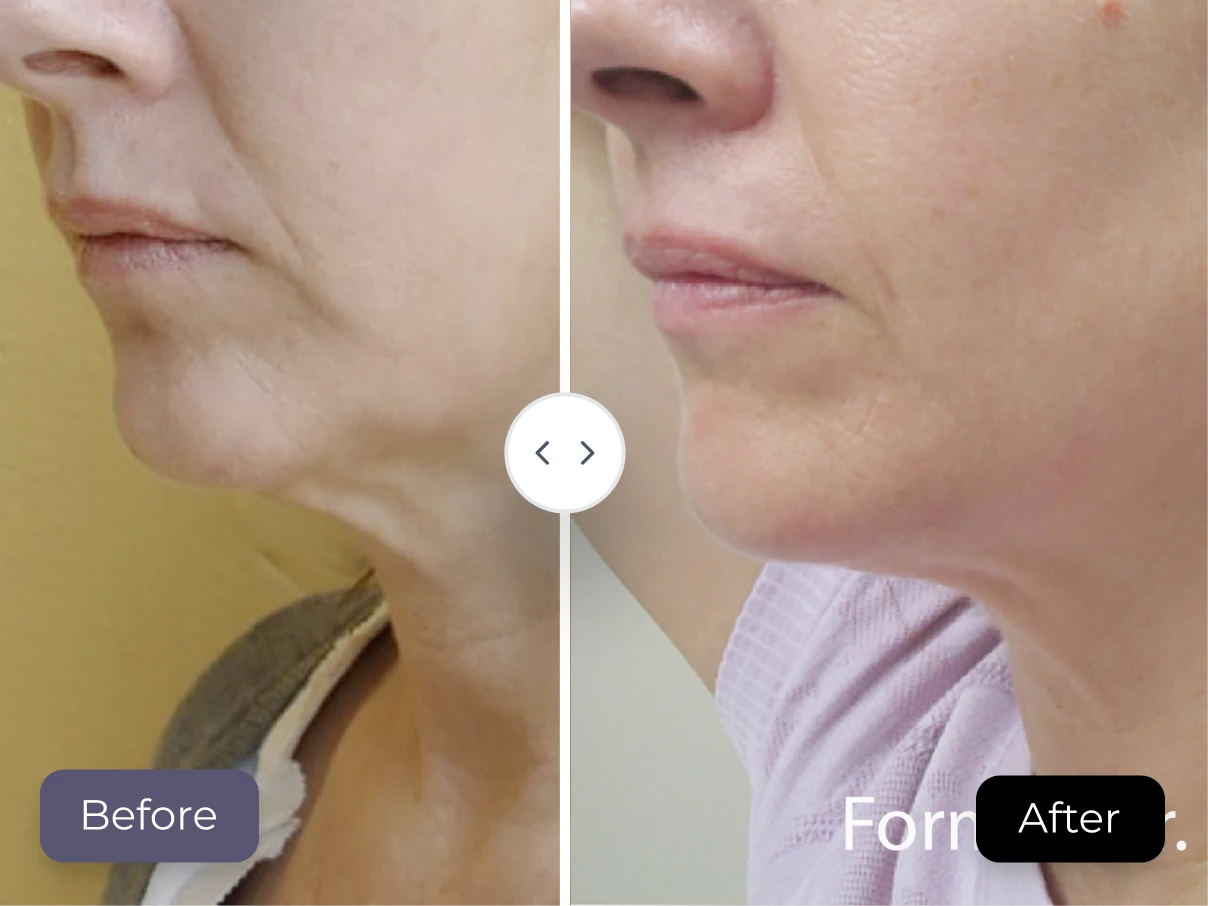
At our North Vancouver clinic, many clients begin noticing early signs of sagging in the jawline or neck, especially after sun exposure or weight changes. Early professional evaluation can help tailor treatments like Forma or Morpheus8 before deeper laxity sets in.

What types of treatments can fix sagging skin on the face and neck?
Sagging skin does not have a single cause, so it rarely has a single solution. Professional treatments generally fall into three categories: collagen support, skin tightening, and structural support. A proper assessment helps determine which combination is appropriate.
Treatments That Stimulate Collagen & Improve Firmness
These treatments focus on encouraging the skin to rebuild collagen, which improves firmness and texture over time.
- Microneedling: Creates controlled micro-injuries that trigger natural repair and collagen formation.
- PRP (Platelet-Rich Plasma): Uses growth factors from the patient’s blood to support skin repair and elasticity.
- Sublative RF: Delivers fractional radiofrequency energy to stimulate collagen while improving texture.
These options are often used for early skin laxity and surface quality concerns.
Treatments That Help with Laxity and Sagging
Energy-based treatments are commonly used when deeper tightening is needed.
- Forma: Uses radiofrequency heat to support collagen production and improve firmness.
- Titan: Uses infrared energy to create gradual tightening and collagen renewal.
- Morpheus8: Combines microneedling with radiofrequency to reach deeper layers of skin.
These treatments are often used on the lower face, jawline, and neck.
Treatments That Support Facial Structure and Contour
Sagging is not always caused by loose skin alone. Loss of structural support can make sagging appear worse.
Dermal fillers restore volume in areas where facial support has declined, improving contour and balance.
Supporting structure can reduce the appearance of sagging even when skin laxity is present.
Treatment Comparison
To help you compare your options, here’s a quick guide to how these popular treatments work, what they target, and when results are typically seen.
| Treatment | What It Does | Best for | Used on | How Soon You’ll See Results |
| Forma | Gently Heats Deeper Skin Layers to Boost Collagen | Mild to Moderate Laxity | Face & Neck | Gradual Change over 4–6 Sessions |
| Titan | Uses Infrared Energy to Stimulate Firmness | Looser Skin, Deeper Tightening | Face & Neck | Builds over 3 Sessions |
| Sublative RF | Boosts Collagen with Fractional RF Energy | Texture & Tone Improvements | Face | 3 Sessions Recommended |
| Morpheus8 | Combines Microneedling with RF for Deep Tightening | Jawline & Loose Neck Skin | Face & Neck | Noticeable Change After 2–3 Sessions |
| Microneedling | Triggers Natural Repair and Collagen | Early Signs of Laxity | Face | 3–6 Sessions Needed |
| PRP | Uses Growth Factors to Improve Elasticity | Tone, Glow, and Texture | Face | 3 to 5 Sessions Recommended |
| Dermal Fillers | Rebuilds Support and Adds Volume | Volume Loss and Facial Sagging | Face | Visible within 2 Weeks Post-Treatment |
Why Combining Treatments Often Works Better for Sagging Skin
Sagging skin rarely affects just one layer of the face or neck. Changes often occur at the surface, within deeper skin layers, and in the underlying support structures at the same time. Because of this, a single treatment usually addresses only part of the concern.
Some treatments focus on improving surface skin quality and firmness, while others target deeper laxity or help support facial structure. When used together, these approaches allow different layers of sagging to be treated in a controlled and balanced way.
Combination plans are common because sagging presents differently from person to person. Factors such as skin quality, age, and treatment goals guide how treatments are selected and paired. Rather than relying on a fixed formula, professionals customize combinations to match the specific needs of each individual.

How Professionals Decide Which Skin Tightening Treatment Is Right for You
Selecting the right skin tightening treatment depends on several individual factors. Professionals consider the degree of sagging, skin thickness and quality, facial structure, age, overall skin health, and the results the patient hopes to achieve.
Even if two people have similar concerns, they may require different approaches because skin responds differently based on these factors. A thorough professional consultation is essential to assess the condition, set realistic expectations, and plan a treatment strategy that addresses both the surface and deeper layers of sagging.
Final Thoughts: Choosing the Right Way to Tighten Sagging Skin
Sagging skin on the face and neck is a natural part of aging, influenced by collagen loss, facial support changes, and lifestyle factors. While skincare helps maintain skin health, professional treatments are often needed to restore firmness.
Non-surgical options at Celebrity Laser & Skin Care can improve skin texture, contour, and quality when chosen based on your needs. Understanding the causes of sagging and realistic treatment outcomes helps set clear expectations.
A personalized consultation can clarify which treatments best suit your skin and goals. Our team can review your routine, assess your skin, and recommend professional options to support firmer, healthier, and more resilient skin.