At a Glance:
Unwanted facial hair in women often stems from hormonal imbalances, genetics, or conditions like PCOS. While natural methods, such as lifestyle changes, vitamins (B6 & E), and herbal remedies like spearmint tea, turmeric, and licorice root, can gradually reduce hair growth, their effects are usually temporary.
For longer‑lasting results, professional treatments like laser hair removal, electrolysis, or prescribed medications may be needed. Electrolysis can achieve permanent removal, while laser offers long‑term or significant permanent reduction in many cases. Combining natural care with expert guidance provides the most reliable path to smoother skin.
Unwanted facial hair, or hirsutism, is a common concern for many women, especially as they age. While it’s natural and often influenced by hormones, genetics, and age, facial hair can still affect confidence and self-image.
At Celebrity Laser & Skin Care, we understand that our clients want lasting, effective solutions that blend natural approaches with advanced, results‑driven treatments. In this guide, we’ll walk through natural ways to manage facial hair growth and highlight long‑term reduction options that can help you feel confident and radiant every day.
Natural Methods for Reducing Facial Hair Growth
Managing facial hair naturally involves gentle, non-invasive approaches that focus on balancing hormones and improving overall well-being. While these methods may not deliver immediate or long-term removal, they can gradually reduce the appearance of facial hair with consistent use over time.
Many women prefer natural solutions because they are safe, affordable, and easy to integrate into daily life. Through simple lifestyle adjustments, herbal remedies, and consistent skincare, it’s possible to support hormonal balance, nourish the skin, and achieve a smoother, more radiant look without relying on harsh or invasive treatments.
These natural methods not only address the physical aspect of unwanted facial hair but also empower women to take a holistic approach to their beauty and health.

Lifestyle Changes to Stop Facial Hair Growth in Females
Adopting certain lifestyle changes can help manage facial hair growth by promoting hormonal balance and overall health. Here are some effective strategies:
Yoga
Regular yoga practice can support facial hair reduction. Certain poses improve blood flow, reduce stress, and may influence estrogen levels, helping to decrease hair growth naturally.
Stress Management
Chronic stress elevates cortisol, which can disrupt hormone balance. Mindfulness, meditation, acupuncture, and acupressure can help manage stress and support natural hormone regulation, reducing the likelihood of excess facial hair.
Weight Management
Maintaining a healthy weight is crucial, as obesity can contribute to hormonal imbalances linked to facial hair growth, especially in conditions like PCOS. A combination of regular exercise and a balanced diet can help regulate insulin and androgen levels.
Healthy Diet
Eating nutrient-rich foods can support hormonal balance:
- Soy Products: Tofu, soy milk, and soy chunks may help regulate hormones.
- Antioxidant-Rich Foods: Bell peppers, cherries, tomatoes, and berries support hormonal health.
- Green Tea: Polyphenols may reduce levels of hair-causing hormones.
- Herbs: Certain herbs like spearmint, lavender, turmeric, and amla have shown anti-androgenic effects. (See “Herbal and Home Remedies” below for details.)
- Crimini Mushrooms: Rich in B vitamins to support thyroid and blood sugar regulation.
- Apricots: Contain B vitamins, support weight management, and hormonal balance.
- Lettuce: Contains chromium, potentially minimizing facial hair growth.

What vitamins stop facial hair growth?
Certain vitamins and nutrients play an important role in regulating hormonal balance, which can help manage or reduce unwanted facial hair growth. These vitamins are thought to support natural hormone regulation and may play a role in moderating the effects of excess androgens, one of the main causes of facial hair in women.
- Vitamin B6: This vitamin may help lower testosterone levels and regulate prolactin, two hormones linked to excessive hair growth. By supporting hormonal stability, Vitamin B6 can contribute to a gradual reduction in facial hair.
- Vitamin E: Known for its antioxidant properties, Vitamin E may support factors that influence hair growth, such as oxidative stress and hormonal stability.
- Magnesium: This mineral may also assist with hormone balance by supporting insulin sensitivity and reducing androgen activity, particularly in women with PCOS.
While vitamins alone may not completely stop facial hair growth, they can support hormonal balance when combined with a healthy diet, stress management, and natural remedies. That said, they are not a substitute for medical diagnosis or treatment. If you suspect an underlying hormonal condition like PCOS, consult a healthcare provider to explore your options.
Herbal and Home Remedies
As introduced in the diet section above, several herbal and home remedies also support natural hormone balance and may help reduce facial hair growth. Many of these herbs have anti-androgenic properties, which help lower hormone levels that trigger excess hair growth.
- Spearmint Tea: Drinking two cups daily may help reduce androgen levels and slow new hair growth.
- Turmeric: Turmeric may support skin health and is traditionally used in facial masks for its potential to influence hair growth over time.
- Licorice Root: Known for its ability to balance hormones, licorice root is traditionally used as tea or a topical mixture, though its effects may vary and are not medically confirmed.
These remedies, when used regularly alongside proper nutrition and lifestyle habits, can provide a natural and gentle way to manage facial hair without invasive treatments. However, they are intended to complement, not replace, medical guidance. If symptoms persist or worsen, it’s important to consult a licensed healthcare provider for a personalized treatment plan.
Limitations of Natural Methods
While natural methods can help reduce facial hair growth and improve overall skin health, it’s important to understand their limitations. These approaches usually work gradually and offer temporary results, which may vary from person to person.
Natural remedies, vitamins, and lifestyle changes can support hormonal balance and slow hair growth, but they often cannot fully address deeper hormonal or genetic causes of excessive facial hair. Women with conditions such as PCOS or hormonal imbalances may find that these methods provide only partial relief.
For those seeking more lasting or faster results, combining natural care with professional treatments (such as laser hair removal) may be necessary to achieve more sustained improvement.
Clinical and Medical Solutions for Reducing Facial Hair
For long-term or significant hair reduction, medical options aim to address underlying hormonal imbalances or target hair follicles directly.
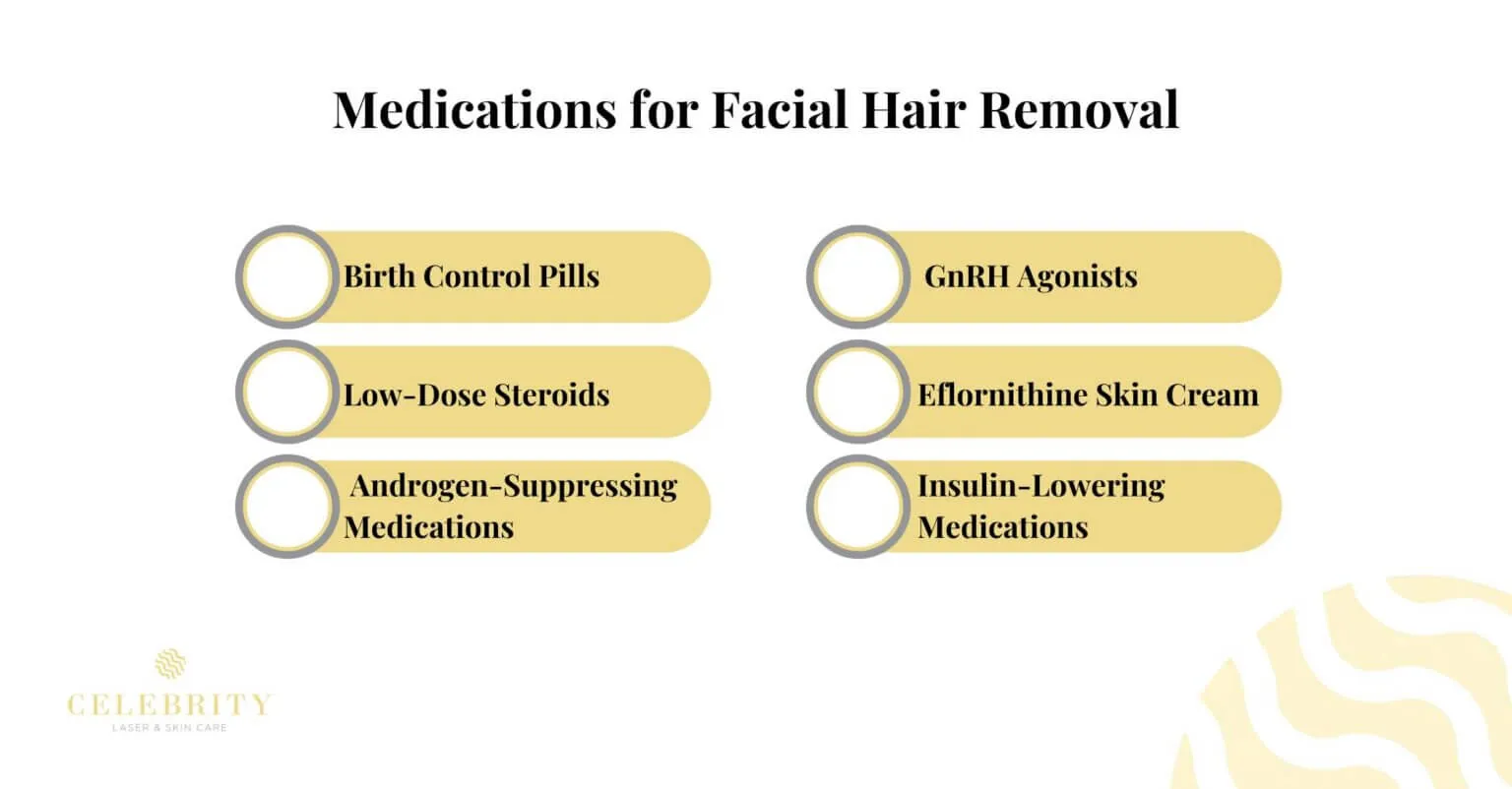
Medications for Facial Hair Removal
For those dealing with hirsutism, certain medications can help manage and reduce unwanted facial hair by addressing underlying hormonal imbalances. While these treatments don’t offer a permanent cure, they can significantly reduce hair growth over time for many individuals. Below are some commonly prescribed options, each with potential side effects to consider:
Birth Control Pills
Regulate menstrual cycles and reduce androgen levels. Side effects: nausea, mood changes, breast tenderness.
Low-Dose Steroids
Prescribed for adrenal-related hirsutism. Side effects: weight gain, blurred vision, and appetite changes.
Androgen-Suppressing Medications
Includes spironolactone, finasteride, and flutamide. Reduce androgen activity to slow hair growth. Side effects: dizziness, fatigue, liver concerns.
Insulin-Lowering Medications
Metformin and pioglitazone help in cases of PCOS by reducing insulin and androgen levels. Side effects: low blood sugar, irregular heartbeat, allergic reactions.
GnRH Agonists
Suppress ovarian androgen production. Effective but costly. Side effects: hot flashes, fluid retention, decreased libido.
Eflornithine Skin Cream
A topical cream that slows facial hair growth. Results appear in 6–8 weeks. Side effects: skin irritation, discoloration, stinging.
Hair Removal Options
Hair removal techniques are non-medical ways to manage excessive hair, offering alternatives for those seeking smoother skin. Many use these methods for areas like the legs, bikini line, and underarms. Here are some standard options:
Waxing, Shaving, and Depilatories
For those with hirsutism, methods like waxing, shaving, and using depilatory creams can be effective for quick results. These approaches are affordable and accessible, but they require regular maintenance to keep hair at bay.
Laser Hair Removal
Laser hair removal targets hair follicles with focused light to reduce future growth. With consistent treatments, it can offer long-lasting or even permanent hair reduction in many cases, making it a popular choice for managing facial and body hair.
➤ More to Know: If you’re considering laser hair removal as a natural and long-term solution, you might be wondering about aftercare. Common questions include, can I wash my face after laser hair removal and can you shower after laser hair removal or even can you workout after laser hair removal. Our guides walk you through what’s safe and what to avoid after treatment.
Electrolysis
Electrolysis uses electric currents to destroy hair follicles individually, offering permanent hair reduction in most cases. It is currently the only method approved by the FDA for permanent hair removal. However, because each follicle is treated one at a time, the process can be time-intensive. Both electrolysis and laser hair removal typically require multiple sessions for best results and may cause some discomfort.
Conclusion
Managing facial hair growth requires a balanced approach that considers both natural and medical options. Natural methods, such as lifestyle changes, vitamins, and herbal remedies, focus on gradual, gentle improvements by supporting hormonal balance and skin health. These options are ideal for women who prefer non-invasive care and wish to work with their body’s natural rhythms.
However, since the results of natural methods are typically slow and temporary, women dealing with deeper hormonal or genetic causes of facial hair may benefit from medical treatments. Options like medications, laser hair removal, and electrolysis can offer longer-lasting or potentially permanent hair reduction by addressing the root causes of unwanted hair growth.
At Celebrity Laser & Skin Care, our goal is to help each woman feel confident and comfortable in her skin. Whether you choose to start with natural remedies or move toward professional treatments, understanding your options empowers you to make the best decision for your needs and lifestyle.
If you’re ready to explore safe, effective, and lasting solutions for smoother, hair-free skin, schedule a consultation with Celebrity Laser & Skin Care today.